Blog / Nissan Fluid Service

When Does a Nissan Require a Complete Fluid Service?

When Does a Nissan Require a Complete Fluid Service

A Nissan requires a complete fluid service every 30,000 miles to 60,000 miles under standard operating conditions, while severe operating environments require fluid inspections every 7,500 miles and earlier replacements. Routine multi-point inspections monitor fluid condition, but complete exchanges for transmission fluid, brake fluid, engine coolant, and driveline lubricants become necessary when chemical additives degrade, moisture accumulates, or vehicle mileage milestones arrive.

Operating conditions dictate whether a vehicle follows the standard schedule or the severe-use schedule outlined in the Nissan Owner's Manual and Maintenance Information. Severe conditions include frequent short trips under 5 miles, extensive idling, towing trailers, driving through standing water or deep mud, and traversing mountainous routes in high ambient temperatures. The rolling hills and valleys of the Appalachian Highlands surrounding Bristol place distinct thermal demands on drivetrains, which causes transmission and differential fluids to deteriorate faster than they would during flat highway cruising.

Different vehicle systems require complete fluid replacement at staggered intervals based on mechanical workload:

  • Engine Coolant: Long-life factory antifreeze protects aluminum engine blocks against internal corrosion and freezing, requiring its first complete flush at 105,000 miles or 84 months, followed by intervals every 75,000 miles or 60 months.
  • Continuously Variable Transmission Fluid: Modern crossovers like the 2025 Nissan Rogue require CVT fluid inspections every 7,500 miles or 12 months, with a complete fluid replacement recommended at 60,000 miles under severe operating conditions.
  • Brake Fluid: Because conventional brake fluid is hygroscopic and naturally pulls moisture from surrounding humid air, Nissan specifies brake fluid replacement every 24 months or 30,000 miles under standard use, and every 15,000 miles under severe service.
  • Differential and Transfer Case Lubricants: All-wheel-drive and four-wheel-drive models require driveline gear oil inspections every 15,000 miles, with complete drains and refills required every 30,000 miles if the vehicle engages in towing or off-pavement driving.

Postponing these services allows contaminated fluids to circulate through sensitive mechanical assemblies. Old fluid loses its thermal transfer capabilities and protective viscosity, leading to friction wear on internal bearings, gears, and hydraulic control valves. Drivers needing guidance on upcoming service intervals can navigate directly to our service center on West State Street or speak with a technician by calling (423) 989-6700.

Table of Contents

What Transmission Fluid Does a Modern Nissan CVT Require and Are Aftermarket Alternatives Safe?

A modern Nissan Xtronic CVT requires Genuine Nissan CVT Fluid NS-3 for third-generation and newer platforms, while earlier generations specify Nissan NS-2. Multi-vehicle aftermarket fluids should not be used in a Nissan continuously variable transmission because universal formulations do not provide the exact friction coefficients and shear stability demanded by the internal steel drive belt and pulley system.

The engineering inside a Nissan continuously variable transmission relies on metal-to-metal traction rather than the geared tooth engagement of a traditional planetary automatic. Two opposing conical pulleys squeeze a heavy-duty steel belt under high hydraulic pressure to alter drive ratios smoothly. The transmission fluid must provide lubrication for bearings while simultaneously generating controlled microscopic traction between the smooth steel belt elements and pulley sheaves. Genuine Nissan CVT Fluid NS-3 features a dedicated friction modifier profile and a precise high-shear viscosity index designed to prevent belt slippage without inducing premature pulley wear.

Aftermarket manufacturers market universal CVT fluids claiming broad compatibility across multiple automakers. These universal fluids use compromise additive packages designed to function passably across diverse transmission designs. In a Nissan unit, unapproved fluids introduce severe operational hazards:

  • Belt Slippage: Inadequate static and dynamic friction coefficients cause the drive belt to slip along the pulley faces during acceleration.
  • Pulley Scoring: Slippage creates rapid microscopic scoring across polished pulley surfaces, leading to permanent grooving and internal metal contamination.
  • Excessive Operating Heat: Deviations in fluid thermal conductivity accelerate heat buildup, degrading internal rubber seals and causing hydraulic pressure drop.
  • Transmission Shudder: Unbalanced friction characteristics trigger distinct low-speed shuddering, erratic ratio shifts, and surging under moderate throttle.
  • Catastrophic Failure: Continued operation with degraded or incorrect fluid causes internal belt breakage, requiring a full transmission assembly replacement.

Genuine OEM fluids maintain strict chemical composition standards throughout their service life. For vehicle owners performing maintenance, authentic factory-formulated fluids can be sourced through our parts department to ensure exact factory compliance.

What Brake and Driveline Fluid Specifications Do Nissan Vehicles Require?

Nissan specifies Genuine Nissan Super Heavy Duty Brake Fluid DOT 3 or an equivalent DOT 4 fluid for hydraulic brake systems, alongside platform-specific hypoid gear oils for all-wheel-drive and four-wheel-drive drivelines. Meeting these factory fluid standards ensures anti-lock braking systems react within millisecond tolerances and differential gears remain protected under high torque loads.

Hydraulic brake fluid operates under high temperatures generated at the brake calipers during deceleration. In humid Appalachian mountain regions, elevated ambient moisture poses a continuous threat to brake systems. Glycol-based brake fluid absorbs ambient humidity through microscopic pores in flexible rubber brake hoses and master cylinder reservoir breathers. When brake fluid moisture content exceeds 3 percent, its boiling point drops significantly, which can lead to vapor lock and sudden pedal fade during sustained downhill descents. Annual moisture testing and regular flushes prevent internal corrosion across anti-lock brake modulators and caliper pistons.

Driveline fluid requirements depend on the vehicle architecture, drivetrain layout, and intended operating environment:

  • Transfer Case Oil: Four-wheel-drive trucks and all-wheel-drive crossovers rely on transfer cases that specify Nissan Hypoid Super GL-5 in viscosity grades of 75W-85 or 80W-90.
  • Rear Differential Fluid: Independent rear drive units on all-wheel-drive models and solid axles on trucks such as the Frontier demand heavy-duty extreme-pressure gear oils meeting API GL-5 specifications to resist gear tooth spalling under heavy towing loads.
  • Manual Transmission Fluid: Performance models equipped with manual gearboxes mandate dedicated Nissan manual transmission fluid with specific synchronizer-friendly friction characteristics to prevent gear grind during quick shifts.

Severe off-pavement driving through mud, sand, or water deep enough to submerge wheel hubs necessitates immediate driveline fluid inspection. Submerged axle breather vents can draw external water into axle housings, causing oil emulsification that strips away gear protection.

Can Using Aftermarket Fluids Void a Nissan Powertrain Warranty?"

Federal law prohibits an automaker from automatically voiding a vehicle warranty simply because an aftermarket fluid was installed, but coverage will be denied if an unapproved fluid directly causes mechanical damage. Under the Magnuson-Moss Warranty Act, the manufacturer bears the burden of demonstrating that an aftermarket part or non-compliant fluid caused the component failure before denying warranty repair claims.

Warranty complications arise when vehicle owners choose multi-vehicle or universal fluids that do not meet the explicit performance criteria established by Nissan engineering. If a transmission or transfer case experiences internal mechanical failure during the powertrain warranty period, factory technical specialists often evaluate fluid samples. Chemical laboratory analysis can verify whether the lubricant in the failed unit contains the factory-specified viscosity, additive chemistry, and thermal markers. If the analysis reveals an unapproved aftermarket fluid caused belt slippage, clutch glazing, or bearing failure, the warranty claim for that assembly is rejected, leaving the owner responsible for the full repair cost.

Protecting warranty eligibility requires adherence to several preventative best practices:

  • Verify Explicit Approval: Ensure any fluid placed in the vehicle explicitly lists compliance with the exact Nissan specification code, such as NS-3 for modern CVTs, rather than broad multi-vehicle suitability claims.
  • Retain Service Records: Maintain detailed, dated maintenance invoices recording the precise fluid brand, product specification, and volume used during each service visit.
  • Adhere to Severe Schedules: Follow severe-service intervals if driving habits or regional terrain align with manufacturer severe-use definitions to prevent claims of mechanical neglect.

Using factory-approved lubricants eliminates ambiguity during warranty evaluations and ensures mechanical components operate within designed parameters.

How Much Does a Nissan CVT Drain and Refill or Complete Fluid Package Cost?

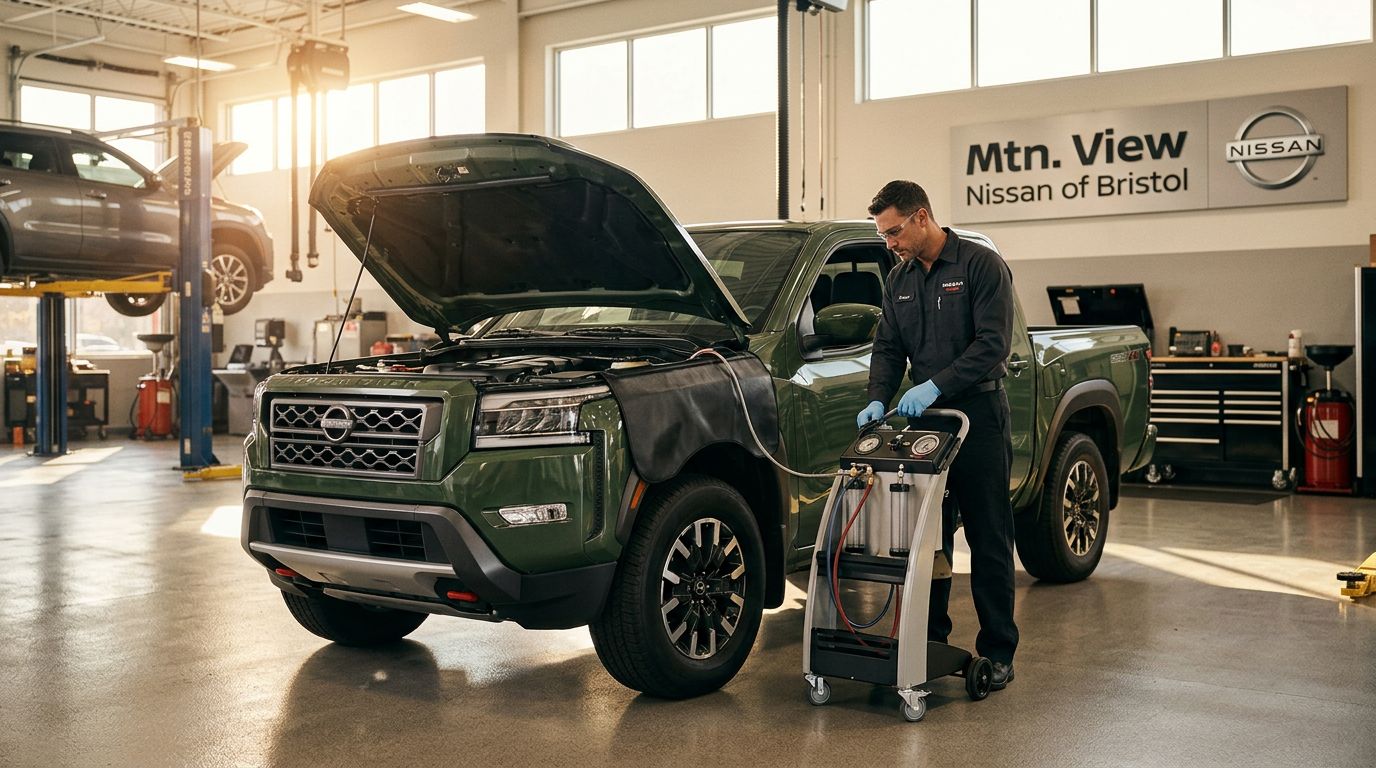
A standalone Nissan CVT fluid drain and refill generally costs between $180 and $320, which includes specialized labor and roughly 4 to 5 quarts of Genuine Nissan CVT Fluid NS-3. A complete vehicle fluid service package that addresses the transmission, cooling system, hydraulic brakes, and driveline differentials typically ranges between $450 and $850.

Cost variations reflect the mechanical complexity of modern closed fluid loops and the volume of fluid exchanged during the service. A standard CVT drain and refill refreshes approximately half of the total transmission fluid volume, as the remainder stays suspended inside the torque converter, internal fluid passages, and auxiliary coolers. Total transmission capacity measures roughly 8 to 9 quarts. Because modern Xtronic transmissions do not feature standard under-hood dipsticks, technicians must monitor transmission fluid temperature using specialized diagnostic interfaces to verify correct level adjustments through designated overflow inspection ports.

Fluid service costs break down across major maintenance categories:

Fluid Service Operation Typical Service Cost Estimated Labor Time Approximate Fluid Volume
CVT Drain and Refill $180 to $320 1.0 hour 4 to 5 quarts
Hydraulic Brake Fluid Flush $110 to $175 0.8 hours 1 to 2 quarts
Engine Coolant Drain and Flush $130 to $210 1.0 hour 7 to 9 quarts
AWD Differential and Transfer Case $160 to $260 1.0 hour 2 to 4 quarts
Comprehensive Multi-Fluid Package $450 to $850 3.0 to 4.0 hours Complete vehicle refresh

Investing in scheduled preventative fluid exchanges costs significantly less than rebuilding or replacing major mechanical assemblies. Routine fluid care preserves hydraulic efficiency, prevents thermal breakdown, and extends the operational longevity of internal transmission belts and gearsets.

Nissan Fluid Maintenance: Service Intervals, Fluid Types, and Costs

Nissan provides model-specific maintenance schedules tailored to vehicle architecture, drivetrain configuration, and driving severity rather than a generic one-size-fits-all fluid routine. Modern computerized engine and transmission control modules track operational severity and fluid deterioration data, signaling when mechanical components require fresh lubricants.

On vehicles such as the Nissan Z, technicians use the factory CONSULT diagnostic system to inspect internal transmission fluid deterioration data, initiating fluid replacement once the software calculation exceeds 77,000 counts. Similarly, utility vehicles like the Nissan Frontier feature digital reminders that calculate engine oil life based on cold starts, engine run time, and load conditions. Drivers should verify the baseline mileage and operational triggers for their specific model to maintain peak mechanical reliability.

Vehicle Component Factory Fluid Specification Standard Inspection Interval Severe Replacement Milestone
Xtronic CVT Genuine Nissan CVT Fluid NS-3 Every 7,500 miles or 12 months 60,000 miles (Inspect every 15,000 miles)
Automatic Transmission Nissan Matic Fluid (Platform Specific) Every 15,000 miles Upon CONSULT deterioration flag
Hydraulic Brake System Genuine Nissan Super Heavy Duty Brake Fluid DOT 3 Every 7,500 miles (Inspect level) 15,000 miles or 12 months
Engine Cooling System Nissan Long Life Antifreeze/Coolant Every 15,000 miles (Inspect level) Initial: 105,000 miles; Then: 75,000 miles
AWD Transfer Case Nissan Hypoid Super GL-5 75W-85 Every 15,000 miles 30,000 miles or 24 months
Rear Differential API GL-5 Gear Lubricant 80W-90 Every 15,000 miles 30,000 miles or 24 months

Adhering to these documented factory intervals safeguards sensitive mechanical assemblies against premature friction and thermal degradation. To ensure factory procedures and diagnostic calibration are followed, vehicle owners can easily schedule a service appointment with our factory-trained maintenance team.

Frequently Asked Questions About Nissan Fluid Care

Q: Can aftermarket universal CVT fluid be safely used in a Nissan transmission?

Universal aftermarket CVT fluids should not be installed in a Nissan transmission because they lack the proprietary friction modifiers and viscosity characteristics of Genuine Nissan CVT Fluid NS-3. Universal fluids are blended to provide broad functionality across varied manufacturer designs, which compromises the precise traction requirements of Nissan steel belts and pulleys. Installing non-specified fluids leads to belt slippage, elevated operating temperatures, pulley scoring, and eventual mechanical failure.

Q: How often should brake fluid be tested for moisture in humid Appalachian climates?

Brake fluid should undergo professional moisture testing at least once a year or every 15,000 miles in high-humidity mountain environments. Glycol-based brake fluid naturally draws moisture out of humid air through flexible rubber lines and reservoir vents. Once fluid moisture concentration surpasses 3 percent, the boiling threshold falls drastically, which can result in sudden brake pedal softness, reduced braking efficiency, and corrosion inside anti-lock braking system valves.

Q: How many quarts of fluid are typically used in a Nissan CVT drain-and-refill?

A standard drain-and-refill procedure on a front-wheel-drive Nissan CVT requires roughly 4 to 5 quarts of Genuine Nissan CVT Fluid NS-3. Total transmission capacity measures roughly 8 to 9 quarts, but nearly half remains trapped inside internal hydraulic circuits, coolers, and the torque converter during a gravity drain. Performing drain-and-refill services at regular intervals continually replenishes active additive packages and maintains thermal stability throughout the system.

Q: What are the primary warning signs that a Nissan requires immediate fluid attention?

Immediate fluid attention is required if an owner observes delayed transmission engagement, unexpected shuddering during low-speed acceleration, an unusually spongy brake pedal, engine temperature spikes, or burning odors beneath the hood. Low fluid levels marked below reservoir minimum lines or illuminated dashboard warning lights also signal potential fluid loss or thermal breakdown. Any persistent mechanical hesitation warrants an immediate professional inspection to prevent secondary component damage.

Q: What diagnostic equipment does a certified technician use to check Nissan transmission fluid life?

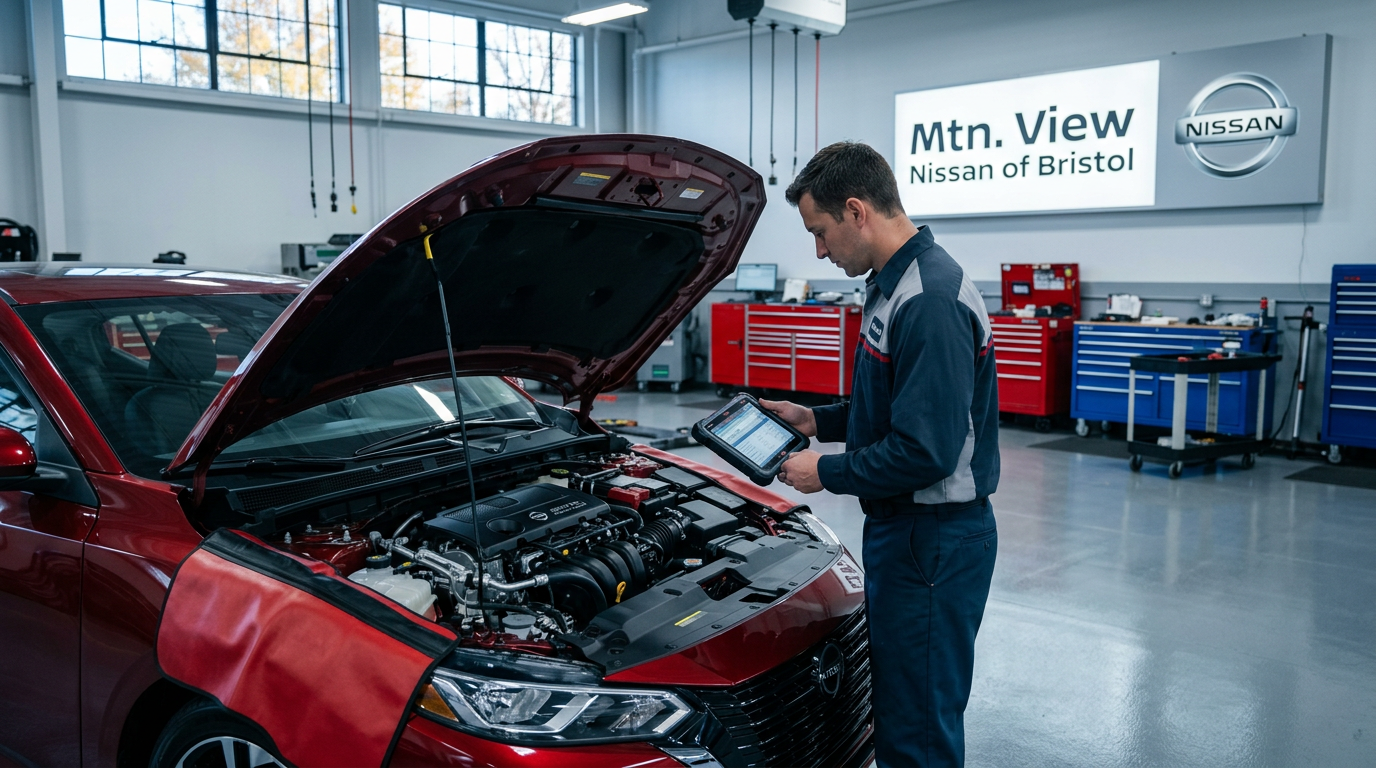
Certified technicians utilize the proprietary Nissan CONSULT diagnostic platform to evaluate transmission fluid condition electronically. The software communicates directly with the transmission control module to read accumulated fluid deterioration counters, which log operational hours, internal temperature spikes, and workload severity. When this recorded value surpasses predetermined engineering thresholds, the technician performs a complete fluid service and resets the internal software calibration.

Schedule Certified Nissan Fluid Service in Bristol

Regular fluid maintenance preserves vehicle performance, protects factory warranty coverage, and prevents costly mechanical breakdowns. Our factory-trained technicians utilize dedicated diagnostic tools, precise fluid exchange equipment, and authentic OEM fluids formulated specifically for your vehicle. Whether your car requires a basic fluid inspection, a standalone transmission service, or a comprehensive multi-system fluid flush, our staff delivers professional automotive care tailored to regional driving demands.

Drivers can schedule service online or drop by our service center at 2536 W State St, Bristol, TN 37620. If you have questions about specific fluid intervals or wish to speak with our service advisors directly, please call (423) 989-6700 to plan your upcoming maintenance visit.


© 2026 Mtn. View Nissan of Bristol. All rights reserved.
Posted in:

Related Posts

Which Vehicle Repairs Qualify for Nissan Warranty Coverage

Which Vehicle Repairs Qualify for Nissan Warranty Coverage?

Nissan warranty coverage applies to repairs required due to defects in factory materials or mechanical workmanship during the specified coverage term. Repairs qualifying for coverage under the 3-year/36,000-mile basic limited warranty include electrical components, steering gear, factory audio equipment, suspension linkages, and climate control hardware. Failures caused by normal wear, external impacts, lack of scheduled fluid maintenance, or unauthorized alterations do not qualify. All eligible warranty adjustments and component replacements must be performed by an authorized dealership using factory parts. When mechanical or electrical components stop operating as engineered, your warranty protects you from unexpected out-of-pocket expenses. Factory protection is split into dedicated tiers to cover different systems throughout your ownership experience: Basic Coverage: Protects nearly all factory-installed mechanical and electrical assemblies for 36 months or 36,000 miles. Powertrain Coverage: Covers the critical mechanical assemblies that propel the vehicle for 60 months or 60,000 miles. Corrosion Coverage: Provides perforation protection against sheet metal rust-through for 60 months and unlimited mileage. Emissions Coverage: Meets federal and state requirements for exhaust and evaporative control components, extending up to 8 years or 80,000 miles on specified control modules and catalytic converters. In addition to mechanical repairs, qualifying vehicles come with emergency roadside support. If a mechanical breakdown occurs while your factory warranty is active, you can call Nissan Roadside Assistance: 800-225-2476 for 24-hour towing support directly to an authorized dealership service department. This manufacturer-backed program also includes flat tire changes, dead battery jump-starts, fuel delivery, and lockout assistance. Daily driving demands along State Street and local commuter routes mean staying on top of scheduled service is the easiest way to keep your factory protections intact. Routine upkeep items such as oil changes, brake pads, tire balancing, and air filters are standard ownership responsibilities and are not covered under defect warranties. If you have questions about whether a recent operational symptom is covered by the manufacturer, call our service team or view directions to our facility so our technicians can inspect the issue. Table of Contents Which Engine and Drivetrain Parts Are Protected by the Powertrain Warranty? Where Can Electric Nissan Vehicles Receive High-Voltage Battery Diagnostic Service? Where Can Drivers Get Authorized Nissan Warranty Service and Repairs in Bristol? How Does Nissan Certified Pre-Owned Warranty Coverage Compare to Factory Protection? What Diagnostic Fees Apply When an Issue Is Not Covered Under Warranty? Nissan Warranty Questions About Coverage, Repairs, and Costs Schedule Certified Nissan Warranty Service Which Engine and Drivetrain Parts Are Protected by the Powertrain Warranty? The Nissan 5-year/60,000-mile powertrain limited warranty protects the core internal mechanical assemblies of the engine, transmission, transaxle, and drive axles against manufacturing defects. Covered engine components include the cylinder block, cylinder head, internal rotating assemblies, timing gears, timing chain, oil pump, water pump, and intake manifold. The coverage ensures that major propulsion assemblies remain operational without unexpected repair costs for five years or 60,000 miles, whichever comes first. System Covered Powertrain Components Common Non-Covered Maintenance Items Engine Assembly Cylinder block, cylinder heads, pistons, crankshaft, camshafts, timing chain, oil pump, water pump, valve train Spark plugs, drive belts, engine oil, engine air filters, coolant hoses Transmission & Transaxle Transmission case, torque converter, internal gears, valve body, electronic control modules, oil pan Transmission fluid flushes, clutch disc linings, worn external linkages Drivetrain & Axles Transfer case, driveshafts, universal joints, differential housing, internal gears, axle shafts, wheel bearings Worn CV axle rubber boots from road debris, wheel alignments Transmission protection covers every internal moving component inside the casing. For vehicles equipped with an Xtronic CVT (Continuously Variable Transmission), coverage includes the steel drive belt, pulley system, hydraulic control valves, and internal oil pump. For vehicles with a traditional stepped automatic or manual transmission, the warranty covers the torque converter, gear clusters, shafts, and factory transmission control modules. Gaskets and seals required to complete a warrantable powertrain repair are also included in the coverage. Drive axle assemblies on front-wheel drive, all-wheel drive, and four-wheel drive configurations are protected from internal mechanical breakdown. On four-wheel-drive trucks and SUVs, this includes the complete transfer case housing, internal planetary gears, front and rear differential assemblies, and constant velocity joints. If a component fails because of an internal manufacturing defect, our technicians replace the assembly using genuine components from our Nissan parts department to preserve factory tolerances. Where Can Electric Nissan Vehicles Receive High-Voltage Battery Diagnostic Service? Electric vehicle battery diagnostic service and high-voltage repairs must be conducted at a certified Nissan EV dealership equipped with factory-specified diagnostic hardware and high-voltage isolation tools. Our service facility utilizes the dedicated Nissan CONSULT diagnostic system to evaluate lithium-ion pack condition, cell balancing, voltage variances, and thermal management efficiency. Factory-certified electric vehicle technicians complete extensive safety coursework to service high-voltage battery enclosures, inverters, and onboard charging systems safely. Diagnostic protocols evaluate individual module health within the battery pack to isolate voltage drop anomalies. If individual cell clusters degrade outside factory parameters, technicians evaluate whether the issue falls under Nissan’s 8-year/100,000-mile EV battery limited warranty. This manufacturer warranty protects against structural cell defects and guards against excessive battery capacity loss below nine out of twelve bars displayed on the vehicle battery capacity gauge. High-voltage testing extends beyond the energy cells to the cooling loops and power distribution hardware. Liquid cooling assemblies, electric heater cores, high-voltage relays, and drive motors undergo automated system stress tests. Independent garages rarely possess the insulated safety equipment, high-voltage disconnect procedures, and factory software keys needed to test or service modern electric powertrains safely. Where Can Drivers Get Authorized Nissan Warranty Service and Repairs in Bristol? Authorized Nissan warranty repairs and factory recall services in Bristol are completed at Mtn. View Nissan of Bristol by factory-trained technicians and cover all late model Nissan vehicles including 2027 Sentra passenger cars, 2027 Rogue SUVs, and 2027 Frontier pickup trucks. Independent mechanical repair shops cannot file warranty claims directly with the manufacturer, meaning work performed outside an authorized franchise dealership usually requires direct customer payment. Our certified facility possesses the specialized equipment, calibration benches, and factory scan tools required to process warranty claims with zero out-of-pocket costs for covered repairs. The varied elevation and steep highway grades of the Appalachian Highlands place unique physical demands on cooling circuits, steering components, and continuously variable transmissions. When unusual operating symptoms arise during routine driving, having a local certified service team evaluate the issue ensures fast identification. Warranty service completed at our facility provides several distinct advantages: Technicians trained directly on factory diagnostic procedures for your specific model year. Direct claim processing through the manufacturer warranty database for seamless approvals. Exclusive installation of genuine factory components backed by a dedicated replacement parts warranty. Real-time checks for active technical service bulletins (TSBs) and outstanding factory recalls during every visit. Scheduling your diagnostic evaluation early prevents minor component friction from causing broader mechanical damage across related vehicle systems. You can reserve an appointment with our master technicians directly through our online service scheduling portal to have your vehicle thoroughly evaluated under warranty terms. How Does Nissan Certified Pre-Owned Warranty Coverage Compare to Factory Protection? A new vehicle factory warranty provides comprehensive bumper-to-bumper protection, whereas standard Nissan Certified Pre-Owned (CPO) coverage focuses primarily on long-term powertrain durability. Every new vehicle includes 3 years or 36,000 miles of basic limited coverage alongside 5 years or 60,000 miles of powertrain security. In contrast, standard Nissan Certified Pre-Owned models include a 7-year/100,000-mile limited powertrain warranty that runs from the vehicle’s original new in-service date. Standard CPO powertrain protection covers major internal components for the engine, transmission, and drive axles, but it excludes electrical, audio, and convenience accessories once the initial 3-year factory coverage expires. Touchscreens, digital driver instrument clusters, multi-camera monitoring systems, and climate control blowers are not protected under the standard pre-owned certification. To bridge this technology gap, drivers can add an optional Security+Plus CPO Wrap plan. A wrap contract extends mechanical, electronic, infotainment, and high-tech safety sensor protection to match the full 7-year or 100,000-mile duration of the powertrain guarantee. Both warranty programs require regular preventative maintenance to remain valid over time. CPO vehicles also include a complimentary one-year prepaid maintenance agreement covering up to two oil and filter replacements and two tire rotations during the first 12 months or 15,000 miles of ownership. What Diagnostic Fees Apply When an Issue Is Not Covered Under Warranty? If a mechanical evaluation reveals that a vehicle concern stems from normal wear, outside impact, or environmental factors rather than a factory defect, standard diagnostic inspection fees apply. Diagnostic testing typically ranges from $120 to $190 across the automotive repair industry, representing the dedicated shop time and technical labor required to hook up scanning interfaces and isolate the root cause of an operational fault. When the diagnosed failure is confirmed to be a factory material defect covered by an active warranty, this diagnostic charge is billed directly to the manufacturer. Under Tennessee law, automotive repair facilities must inform customers of their right to receive a written estimate for repairs projected to exceed $250. Furthermore, shops are restricted from exceeding that written repair total by more than 25 percent without customer authorization or a good-faith attempt to obtain consent. Our service advisors review inspection findings transparently before any non-covered repair work begins. Common non-warrantable issues identified during diagnostic scans include: Rodent damage to internal engine bay wiring harnesses or vacuum tubing. Fluid contamination resulting from water intrusion, incorrect fuel, or neglected maintenance. Suspension or steering damage caused by potholes, curbs, or off-pavement driving. Normal wear of friction materials, such as brake pads, rotors, and wiper blades. Knowing the physical cause of a mechanical symptom gives you clear decision-making power before authorizing additional out-of-warranty mechanical labor. Nissan Warranty Questions About Coverage, Repairs, and Costs Q: Can the cost of a Nissan extended warranty contract be rolled into vehicle financing? Purchasing a Nissan Security+Plus extended service agreement at the time of your vehicle transaction allows the total contract cost to be incorporated directly into your monthly financing agreement. Including this mechanical coverage in your retail installment contract spreads the expense across your regular loan term rather than requiring an upfront lump-sum payment at the service counter. Q: Does the Nissan factory warranty transfer to a second owner automatically? Unexpired factory warranty coverage transfers automatically to subsequent private buyers without transfer fees or complex paperwork requirements. The coverage remains tied directly to the vehicle identification number (VIN) for the remainder of the active time and mileage limits, provided the car was not exported and registered outside the United States within its first six months of service. Q: Will installing aftermarket accessories void my factory warranty protection? Installing aftermarket parts does not automatically void your entire factory warranty, but any mechanical or electrical failure caused directly by that non-factory component will not be covered. If an aftermarket lift kit damages factory CV joints or an unapproved remote start system shorts the body control module, repairs for those specific broken components must be paid out of pocket. Q: What maintenance documentation is required when filing a major warranty claim? Filing major powertrain claims requires showing documented proof of scheduled maintenance, including date-stamped receipts for oil changes, filter renewals, and fluid services matching the intervals in your owner's manual. Keeping organized physical receipts or detailed digital dealership service histories verifies that component failure resulted from a material defect rather than lubricating oil breakdown or sludge buildup. Q: How does towing coverage work if a breakdown occurs away from home? If an unexpected mechanical breakdown leaves your vehicle inoperable, Nissan Roadside Assistance dispatches emergency towing transport to the nearest authorized franchise service center. For breakdowns occurring more than 100 miles from your residence due to a warrantable mechanical defect, factory trip interruption benefits provide financial reimbursement for emergency meals, lodging, and substitute transportation while repairs are completed. Schedule Certified Nissan Warranty Service Protecting your vehicle investment requires addressing unusual operating noises, diagnostic warning lights, and performance changes as soon as they arise. Our service department provides authorized factory evaluations, genuine replacement parts, and dedicated claim processing to restore your car to peak working condition. If your vehicle exhibits an active check engine light or mechanical hesitation, drop by our service center at 2536 W State St, Bristol, TN 37620 or give our advisors a call at (423) 989-6700 to verify your active warranty coverage. You can also get directions to Mtn. View Nissan of Bristol and have our master technicians perform a complete multi-point inspection today. © 2026 Mtn. View Nissan of Bristol. All rights reserved.
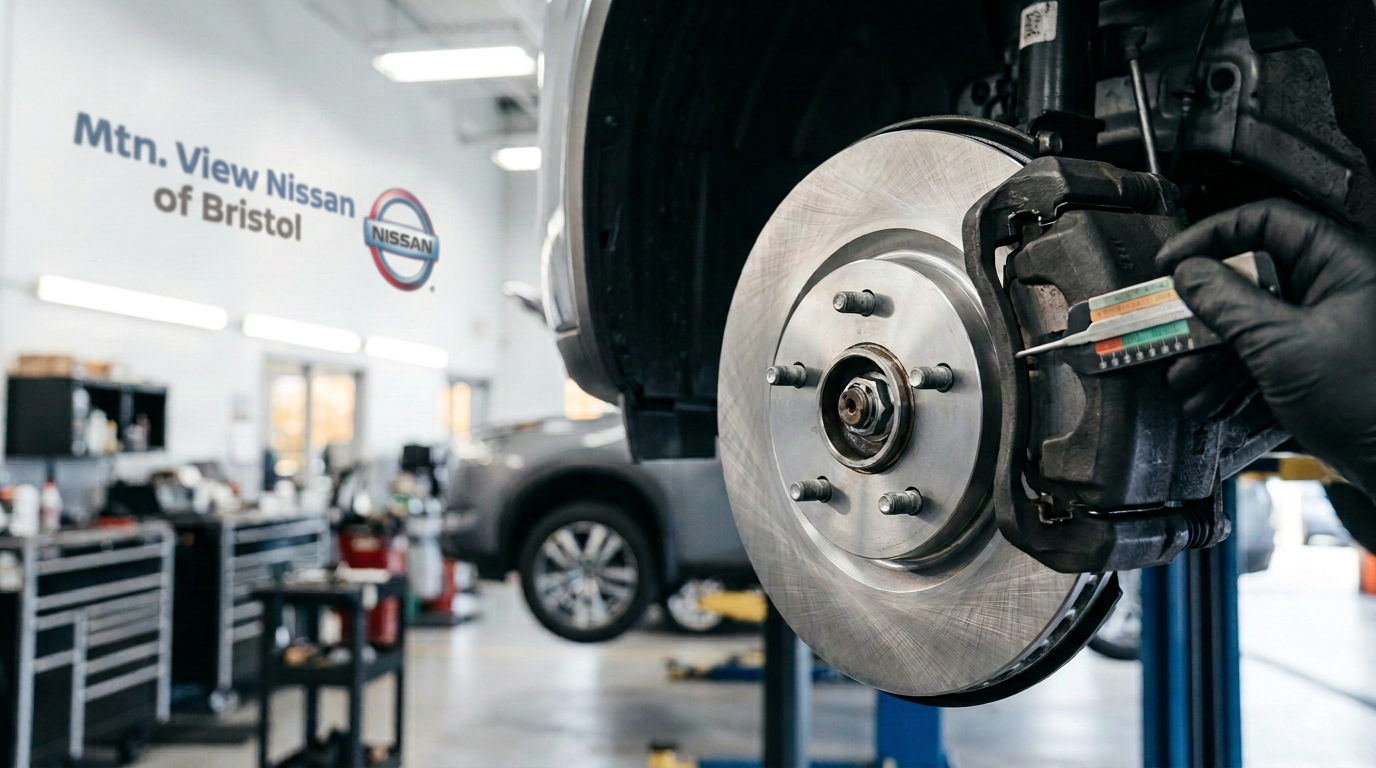
How Often Does a Nissan Pathfinder Require Brake Maintenance

How Often Does a Nissan Pathfinder Require Brake Maintenance?

A Nissan Pathfinder requires a professional brake inspection every 10,000 to 15,000 miles or once per year, while brake pad replacements are typically needed every 30,000 to 70,000 miles. Fresh brake fluid should be installed every 24 months or 24,000 miles to remove moisture and preserve full hydraulic pressure across all four wheels. Regular inspection schedules ensure that friction components remain within safe operating tolerances before rotor damage occurs. PATHFINDER BRAKE MAINTENANCE TIMELINE Every 10,000 - 15,000 Miles : Visual pad thickness & rotor inspection Every 24,000 Miles / 2 Years: Full brake fluid drain and system flush Every 30,000 - 70,000 Miles : Axle pad replacement & rotor service The 3-row SUV features 4-wheel disc brakes engineered with 13.8-inch front vented rotors and 13.0-inch rear vented rotors. These generous rotor surface dimensions dissipate intense kinetic heat created when bringing a fully loaded vehicle to a complete stop. However, driving conditions across the Appalachian Highlands terrain in Bristol place distinct physical demands on friction materials. Routine stop-and-go trips, severe weather changes, and towing heavy gear require proactive oversight of pad wear depth and rotor surface integrity. During a routine service visit, technicians measure pad friction thickness in millimeters, evaluate rotor runout, check caliper slide pins, and test the boiling point of the hydraulic fluid. Catching uneven pad wear early prevents damage to the caliper pistons and avoids costly rotor replacement. Drivers needing expert diagnostics can request our Bristol dealership directions or give our service department (423) 989-6700 a call to speak with an advisor. Table of Contents What Are the Early Warning Signs That a Nissan Pathfinder Needs Brake Service? How Does East Tennessee Mountain Driving Impact Pathfinder Brake Pad Life? What Is the Cost and Fluid Flush Schedule for Front vs Rear Pathfinder Brake Repairs? How Do Pathfinder Tow Mode and Rear Automatic Braking Dynamics Function? Where to Get Certified Nissan Pathfinder Brake Inspections and Repairs Near Bristol Common Questions About Nissan Pathfinder Brake Maintenance Maintain Reliable Stopping Power at Mtn. View Nissan of Bristol What Are the Early Warning Signs That a Nissan Pathfinder Needs Brake Service? High-pitched squealing from built-in metallic wear indicators, a soft or spongy brake pedal feel, steering wheel vibration under deceleration, or an illuminated dashboard warning light signal that a Nissan Pathfinder requires immediate brake service. Ignoring these audible and tactile warnings increases stopping distances and leads to premature rotor scoring. COMMON BRAKE WARNING SIGNS High-Pitched Squeal : Wear indicator tab contacting the rotor surface Pedal Pulsation : Thermal disc warping or lateral rotor runout Spongy Pedal Feel : Moisture contamination or air in hydraulic lines Deep Metal Grinding : Friction pad completely worn to metal backing Manufacturers build sacrificial metal tabs into friction pads that contact the rotor surface once pad thickness drops near 3 millimeters, producing a persistent squeal. If pad wear progresses beyond this point, the steel backing plate strikes the rotor face directly, causing severe metal-on-metal grinding. Steering wheel shudder during high-speed braking points to rotor thickness variation or thermal warping, which prevents the pads from making flat contact against the disc surface. Hydraulic system issues present as altered pedal resistance. Air bubbles in the lines or degraded fluid cause the pedal to travel closer to the floorboard before engagement occurs. Our technicians observe that drivers navigating local mountain routes often notice subtle pedal pulsation during prolonged downhill braking long before audible squealing starts, indicating localized heat buildup in the front rotors. Addressing these early indicators promptly protects the vehicle's standard four-wheel ABS, Brake Assist, and Electronic Brake-force Distribution systems. How Does East Tennessee Mountain Driving Impact Pathfinder Brake Pad Life? Navigating steep elevation shifts increases kinetic friction and thermal strain, which can shorten Pathfinder brake pad and rotor lifespan by 20% to 40% compared to flat-highway driving. Frequent descents force the braking system to absorb extreme heat continuously without adequate cooling intervals between stops. MOUNTAIN VS. FLAT TERRAIN BRAKE WEAR Flat Highway Driving : Estimated pad lifespan 50,000 - 70,000 miles Mountainous Terrain : Estimated pad lifespan 30,000 - 45,000 miles Impact Factor : Constant friction heat lowers pad durability When descending mountain highways, friction pads clamp against the cast-iron rotors for extended periods, generating temperatures that can exceed 600 degrees Fahrenheit. This intense thermal load glazes the pad friction material, reducing its coefficient of friction and causing pedal fade. Repeated heat spikes can also cause heat checking—microscopic stress cracks on the rotor face—which accelerates pad wear and reduces overall stopping efficiency. Family outings and camping trips around Bristol put additional weight in the cabin and cargo bay, further increasing kinetic energy during downhill braking. Driver habits play a vital role in preserving component longevity. Tapping the brakes firmly and releasing them allows air to flow over the vented rotors, whereas constant light pressure traps heat against the friction surface. Utilizing lower transmission gear ratios during steep descents helps control vehicle velocity using engine compression rather than relying solely on the service brakes. What Is the Cost and Fluid Flush Schedule for Front vs Rear Pathfinder Brake Repairs? Front brake service on a Nissan Pathfinder carries a slightly higher parts cost than rear brake service because the front axle performs 60% to 70% of total stopping work using larger pads and 13.8-inch rotors. A full hydraulic fluid flush is recommended every 24 months or 24,000 miles to clear out moisture and protect internal hydraulic valves. Service Component Front Axle Rear Axle Rotor Diameter 13.8 inches (vented) 13.0 inches (vented) Workload Distribution 60% - 70% of stopping force 30% - 40% of stopping force Pads & Hardware Size Heavy-duty large footprint Standard secondary footprint Recommended Service Every 30,000 - 50,000 miles Every 40,000 - 60,000 miles Because front brakes handle dynamic weight transfer during deceleration, front pads feature a larger surface area and thicker friction lining. The rear axle utilizes 13.0-inch vented rotors and smaller calipers. Consequently, replacing front pads and rotors requires heavier hardware and greater material mass, resulting in a modest price premium per axle compared to the rear setup. Brake fluid is hygroscopic, meaning it naturally absorbs ambient moisture through rubber flexible hoses and reservoir seals over time. Moisture lowers the boiling point of DOT 3 or DOT 4 fluid, which can cause fluid aeration under heavy braking and trigger internal oxidation inside the anti-lock brake pump. Installing factory-specified friction components and fluid from our genuine Nissan parts department preserves original pedal feel and maintains system calibration for the engine's standard 3.5L V6 power delivery. How Do Pathfinder Tow Mode and Rear Automatic Braking Dynamics Function? Pathfinder Tow Mode alters transmission shift logic to hold lower gears longer and initiate downhill downshifts for engine braking, while Rear Automatic Braking uses rear sonar sensors to trigger automatic hydraulic pressure if an obstacle is detected during low-speed reversing. Both technologies actively manage vehicle dynamics to reduce physical stress on the wheel brakes. ADVANCED BRAKING & ASSIST DYNAMICS Tow Mode : Downshift logic aids engine braking on grades Rear Automatic Braking: Sonar sensors apply full stop in reverse Dynamic Brake Support : Boosts hydraulic force in emergency stops Safety Recognition : IIHS TOP SAFETY PICK+ & NHTSA 5-Star Rating When pulling up to the maximum 6,000 lbs towing capacity, activating Tow Mode optimizes the 9-speed automatic transmission. Downhill Speed Control detects vehicle acceleration on descents and automatically shifts to a lower gear ratio, utilizing engine compression to slow the vehicle. This engine braking assistance minimizes thermal buildup in the wheel rotors, preserving braking power for sudden stops. For tight parking maneuvers, Rear Automatic Braking operates through rear bumper sensors. If a driver reverses toward a stationary object without slowing down, the module sends an emergency pulse command to the hydraulic actuator, halting the SUV instantly. These features build upon standard safety engineering, including Automatic Emergency Braking with Pedestrian Detection and Dynamic Brake Support, which helped earn the Pathfinder an IIHS TOP SAFETY PICK+ rating and a 5-star overall safety score from NHTSA. Where to Get Certified Nissan Pathfinder Brake Inspections and Repairs Near Bristol Nissan Pathfinder owners can access factory-certified brake diagnostics, genuine OEM pad and rotor replacements, and hydraulic flushes at Mtn. View Nissan of Bristol. Factory-trained technicians use specialized Nissan diagnostic software to verify electronic brake actuators and measure pad thickness precisely. MTN. VIEW NISSAN OF BRISTOL SERVICE ADVANTAGE Factory-Trained Technicians: Certified on all Nissan hydraulic systems Genuine OEM Nissan Parts : Factory pad compounds & direct-fit rotors Advanced Diagnostics : Computerized ABS & sonar sensor alignment Convenient Location : Accessible service center on West State St Using genuine OEM pads and rotors ensures that friction coefficients match the factory calibration of the vehicle's electronic driver-assist safety suite. Generic aftermarket pads can introduce noise, increase dust, or alter sensor response times during automated emergency stops. Certified service centers maintain exact factory alignment tolerances for calipers, hardware clips, and parking brake actuators. Located convenient to the historic State Street corridor, our facility features modern service bays equipped specifically for midsize 3-row SUVs. Owners can find our service center location easily, speak with an advisor by calling (423) 989-6700, or directly schedule a service appointment online to reserve a dedicated maintenance slot. Common Questions About Nissan Pathfinder Brake Maintenance Q: Can worn brake rotors be resurfaced instead of replaced on a Pathfinder? Rotors can be resurfaced on a lathe if their remaining metal thickness exceeds the minimum discard specification stamped on the rotor housing. However, if severe heat checking, deep grooves, or thermal warping are present, replacing the rotors with new genuine Nissan units is necessary to restore flat friction contact and maintain proper heat dissipation. Q: Why does the brake pedal feel soft after driving down steep mountain grades? A soft brake pedal after mountain driving indicates fluid overheating or pad glazing. Extreme temperatures created by continuous braking can cause moisture in aging brake fluid to boil, creating compressible vapor bubbles in the hydraulic lines. Flushing old fluid and inspecting pad friction material resolves pedal fade and restores crisp pedal feel. Q: How does Automatic Emergency Braking interact with standard brake pad wear? Automatic Emergency Braking with Pedestrian Detection relies on predictable friction coefficients to calculate stopping distances accurately. Worn brake pads or warped rotors decrease physical stopping efficiency, which can increase the distance required for automated safety systems to bring the SUV to a complete halt. Maintaining fresh brake components preserves calibrated safety system performance. Q: What happens if brake fluid is not flushed every two years? Skipping hydraulic fluid flushes allows accumulated moisture to corrode internal caliper pistons, rubber seals, and the ABS hydraulic control module. Water accumulation also drastically lowers the fluid's boiling point, leading to severe brake fade during heavy usage or high-load towing scenarios. Regular two-year flushes prevent costly hydraulic component failures. Q: What items are checked during a multi-point Nissan brake inspection? A multi-point brake inspection evaluates inner and outer pad lining thickness, rotor surface condition, caliper slide pin movement, brake line integrity, parking brake adjustment, and fluid moisture levels. Technicians also inspect dust boots and sensor wiring to verify that all electronic braking assists function according to factory specifications. Maintain Reliable Stopping Power at Mtn. View Nissan of Bristol Keeping your vehicle's braking system in peak condition is vital for family safety, mountain driving confidence, and long-term vehicle dependability. Proactive inspections and timely pad replacements protect high-value components like rotors and calipers from unnecessary wear, saving you time and stress down the road. Our team at Mtn. View Nissan of Bristol is equipped with the specialized tools, factory-trained expertise, and genuine OEM parts needed to service your vehicle correctly. Take the next step in protecting your vehicle by choosing to schedule a service appointment online today. © 2026 Mtn. View Nissan of Bristol. All rights reserved.
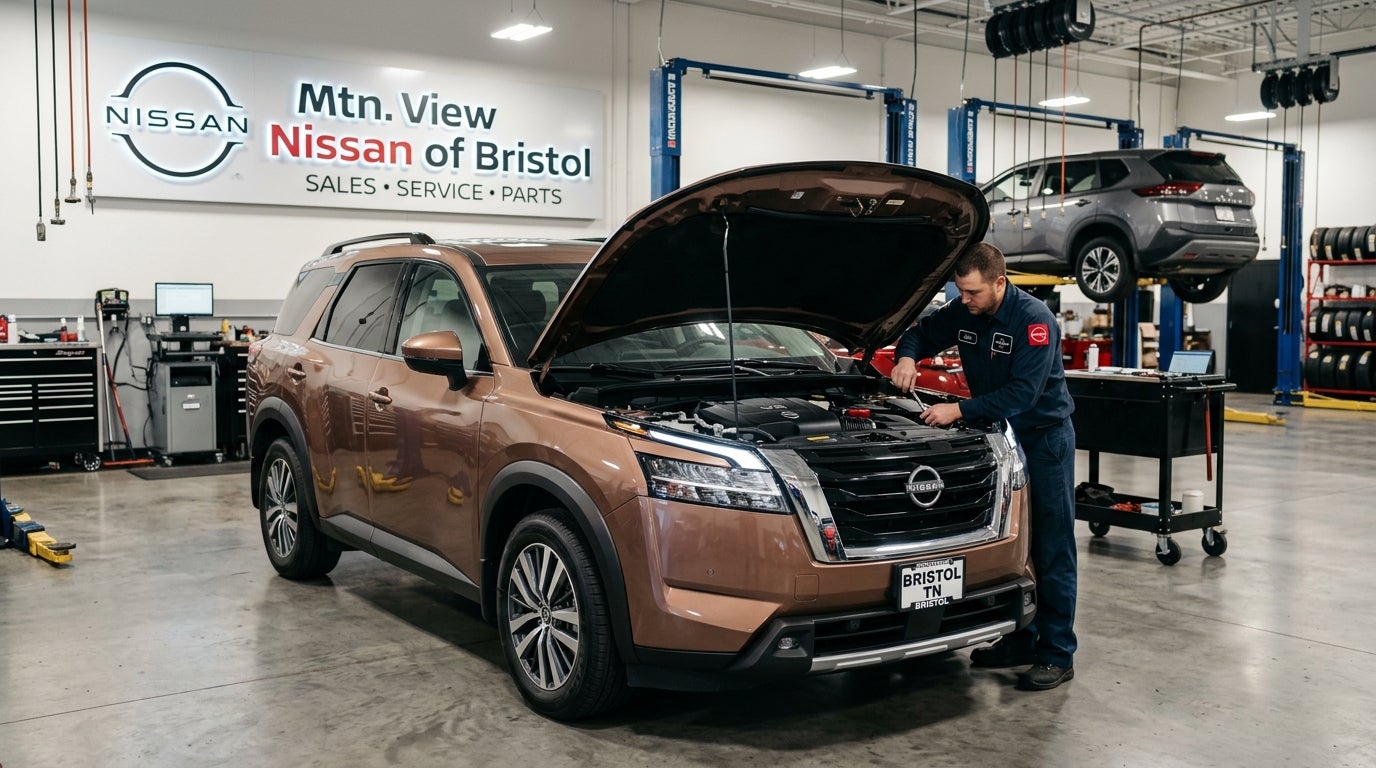
What Oil Service Does a 2026 Nissan Pathfinder Need

What Oil Service Does a 2026 Nissan Pathfinder Need?

The 2026 Nissan Pathfinder requires a full synthetic engine oil change every 7,500 miles or 6 months under standard driving conditions, using 0W-20 full synthetic oil that meets API SP and ILSAC GF-6 specifications. This service includes replacing the engine oil filter with a genuine OEM filter, topping off essential under-hood fluids, and performing a detailed multi-point safety inspection to protect internal engine components and maintain efficiency. Proper engine maintenance is essential for preserving the performance of the Pathfinder's 3.5-liter V6 engine. Engine oil lubricates moving parts, reduces friction, draws heat away from the combustion chambers, and prevents harmful sludge buildup. Routine oil changes keep the valvetrain operating smoothly, maintaining efficiency and protecting critical mechanical components. Driving through the Appalachian Highlands around Bristol introduces steep elevation changes and rolling hills that place added thermal strain on an engine. Fresh synthetic oil resists thermal breakdown during heavy engine loads, maintaining consistent viscosity whether you are cruising along highway stretches or hauling gear. Regular maintenance also helps preserve factory warranty coverage and supports long-term vehicle reliability. When you bring your vehicle to our service department at our Bristol service center address, factory-trained technicians handle every step of the oil change process. From draining worn motor oil to installing a factory-spec filter, our team ensures your SUV receives precise attention. You can also give our team (423) 989-6700 to ask about current service drop-off options. Table of Contents What Type of Oil and Transmission Are in the 2026 Nissan Pathfinder? How Often Does a Nissan Pathfinder Need an Oil Change? How Much Does a Pathfinder Oil Change Cost and Are Specials Available? Where to Get Official Nissan Certified Oil Service in Bristol Common Questions About Nissan Pathfinder Maintenance Keep Your Pathfinder Running Strong at Mtn. View Nissan of Bristol What Type of Oil and Transmission Are in the 2026 Nissan Pathfinder? The 2026 Nissan Pathfinder features a 3.5-liter DOHC 24-valve V6 engine paired with a 9-speed automatic transmission, requiring 0W-20 full synthetic oil meeting API SP and ILSAC GF-6 industry standards for proper lubrication and engine protection. All trims of the 2026 Pathfinder utilize Nissan's proven 3.5-liter V6 engine, producing 284 horsepower and 259 lb-ft of torque on standard trims like the SV, SL, and Platinum. On the off-road-focused Rock Creek trim, engine tuning increases output to 295 horsepower and 270 lb-ft of torque when operating on premium fuel. To maintain these performance levels, Nissan specifies low-viscosity 0W-20 full synthetic oil. This grade flows quickly during cold starts to reduce friction while providing robust film strength at high operating temperatures. The engine transfers power through a smooth-shifting 9-speed automatic transmission with manual mode. Replacing older continuous variable designs, this traditional automatic transmission features optimized gear ratios that deliver direct throttle response and confident acceleration. The 9-speed transmission also enables a 6,000-pound maximum towing capacity when properly equipped with an available tow package. Proper engine lubrication is directly tied to transmission efficiency, as clean engine oil prevents heat transfer issues and keeps the entire powertrain operating within ideal thermal limits. Using non-approved oil weights or conventional oil can lead to increased engine friction, reduced fuel economy below the factory rating of 21 mpg city / 27 mpg highway, and potential engine wear. Original equipment filters feature synthetic filter media and internal anti-drainback valves designed specifically for Nissan V6 oil pressures. Owners who maintain their vehicles at home or wish to inspect genuine components can order factory parts directly through our Nissan parts department. How Often Does a Nissan Pathfinder Need an Oil Change? The recommended oil change interval for a 2026 Nissan Pathfinder in Bristol varies from 5,000 to 7,500 miles depending on driving conditions, highlighting the importance of tailored maintenance schedules. When SUV owners ask our service team about routine upkeep, they often want to know if towing a camper through the mountains requires more frequent fluid changes than daily highway driving. The factory maintenance schedule differentiates between standard operation and severe operating conditions. Understanding which schedule matches your daily driving habits ensures your engine oil is replaced before oxidation and thermal stress degrade its protective qualities. Severe driving conditions apply to many drivers and include: Frequent short trips of less than 5 miles in normal temperatures or less than 10 miles in freezing weather. Driving in dusty conditions, rough mountain roads, or areas with heavy road salt exposure. Extensive idling, stop-and-go traffic, or frequent low-speed driving. Towing a trailer, carrying heavy cargo loads, or using a loaded roof rack. Daily commutes along State Street and surrounding thoroughfares in Bristol often involve stop-and-go traffic and short trip sequences that qualify as severe driving. Adhering to the 5,000-mile interval under these conditions prevents microscopic soot and moisture from building up inside the crankcase. Every oil service should also be paired with a tire rotation to promote even tread wear and an inspection of the braking system, engine air filter, and battery charging health. How Much Does a Pathfinder Oil Change Cost and Are Specials Available? A standard full synthetic oil change for a Nissan Pathfinder typically costs between $75 and $115, which includes up to 5.4 quarts of 0W-20 full synthetic oil, a genuine factory oil filter, fluid top-offs, and a multi-point safety inspection. Service pricing depends on the required fluid volume and oil type. Because the 3.5-liter V6 engine requires full synthetic oil for optimal valvetrain protection, the cost is slightly higher than older conventional oil services, but the extended interval of 7,500 miles under normal conditions balances the overall maintenance investment. Dealer service offers strong value by combining fluid replacement with professional diagnostic checks performed by certified technicians using OEM tools. Eligible new 2026 Pathfinder models may qualify for complimentary maintenance coverage through the Nissan Maintenance Care program. This factory program provides up to three complimentary oil and filter changes within the first 24 months or 24,000 miles of ownership, reducing initial ownership costs for new vehicle buyers. Owners should consult their warranty documentation to verify coverage eligibility. For owners paying out-of-pocket, promotional pricing and seasonal maintenance packages can significantly reduce out-of-pocket expenses. Dealership service departments regularly publish discounts on synthetic oil changes, multi-point inspections, and bundled services that combine oil replacement with tire rotations or cabin air filter changes. Checking current service specials prior to booking ensures you receive the most competitive price for factory-certified maintenance. Where to Get Official Nissan Certified Oil Service in Bristol Official Nissan oil change service in Bristol is available at Mtn. View Nissan of Bristol, where factory-trained technicians perform certified maintenance using genuine OEM parts and specialized diagnostic equipment. Choosing a factory-authorized service center ensures that your Pathfinder is serviced by technicians who work on Nissan vehicles every day. Independent quick-lube facilities frequently use universal aftermarket oil filters and bulk multi-grade oils that may not strictly adhere to Nissan's API SP and ILSAC GF-6 technical requirements. Certified Nissan technicians follow precise factory torque specifications for the oil pan drain plug and oil filter housing, preventing stripped threads or improper seal installation. Every certified service visit includes a comprehensive multi-point inspection. Technicians check 27 vital areas of your vehicle, including: Brake pad thickness, rotor condition, and hydraulic line integrity. Tire tread depth, inflation pressure, and wear patterns. Battery health, terminal connections, and cranking amp output. Engine coolant, brake fluid, windshield washer fluid, and power steering fluid levels. Serpentine belts, radiator hoses, and suspension components. For residents enjoying outdoor activities and regional drives near Bristol, having a trusted certified service center nearby ensures quick and reliable vehicle maintenance. To schedule your next visit, you can conveniently book a service appointment online and choose a time slot that fits your schedule. Common Questions About Nissan Pathfinder Maintenance What happens if standard conventional oil is used instead of 0W-20 full synthetic? Using conventional oil instead of 0W-20 full synthetic oil in a 2026 Nissan Pathfinder can cause increased internal engine friction, inadequate lubrication during cold starts, and accelerated sludge formation. The 3.5-liter V6 engine is engineered with tight mechanical tolerances that require low-viscosity synthetic oil to protect the variable valve timing system and internal bearings under high operating temperatures. Does towing a trailer lower the required interval between oil changes? Towing a trailer or hauling heavy cargo places increased thermal load on the engine, causing motor oil to break down and oxidize faster. Nissan recommends switching to the severe maintenance schedule when towing, which reduces the oil change interval from 7,500 miles to 5,000 miles or 6 months. This protects internal components from thermal stress and excessive wear. How long does an express oil change service take at the dealership? A routine Express Service oil change at an authorized dealership typically takes between 30 and 45 minutes. This time covers draining the old oil, replacing the engine filter with a genuine OEM part, filling the crankcase with fresh 0W-20 full synthetic oil, topping off essential fluids, and performing a complete multi-point inspection. Is a tire rotation included with a Pathfinder oil change? While a basic oil change focuses on engine fluid and filter replacement, tire rotations are often bundled during routine maintenance visits. Rotating tires every 5,000 to 7,500 miles ensures even tread wear across all four positions, which is especially important for models equipped with Intelligent 4x4 all-wheel-drive systems. How can I check the engine oil level between service visits? To check the oil level, park your Pathfinder on a level surface, turn off the engine, and wait roughly five minutes for the oil to drain into the oil pan. Pull out the dipstick located near the front of the 3.5-liter V6 engine, wipe it clean with a rag, reinsert it fully, and pull it out again. The oil level should read between the high and low indicator marks. Keep Your Pathfinder Running Strong at Mtn. View Nissan of Bristol Maintaining your 2026 Pathfinder in Bristol with regular synthetic oil changes is the single best way to ensure long-term engine reliability, maintain towing capability, and protect your investment. Following factory maintenance schedules prevents premature wear on internal V6 engine components and keeps your SUV running smoothly on every journey. Our team at Mtn. View Nissan of Bristol provides expert care tailored specifically to your vehicle. From complete fluid exchanges using genuine OEM filters to thorough multi-point safety checks, our certified technicians deliver precise service on every visit. We serve the Tennessee communities of Bluff City, Blountville, Elizabethton, Johnson City, Kingsport, and Abingdon, VA. Visit us today at our dealership located on W State St to discuss your Pathfinder's maintenance needs, or give our team (423) 989-6700 to schedule your next oil change service. © 2026 Mtn. View Nissan of Bristol. All rights reserved.