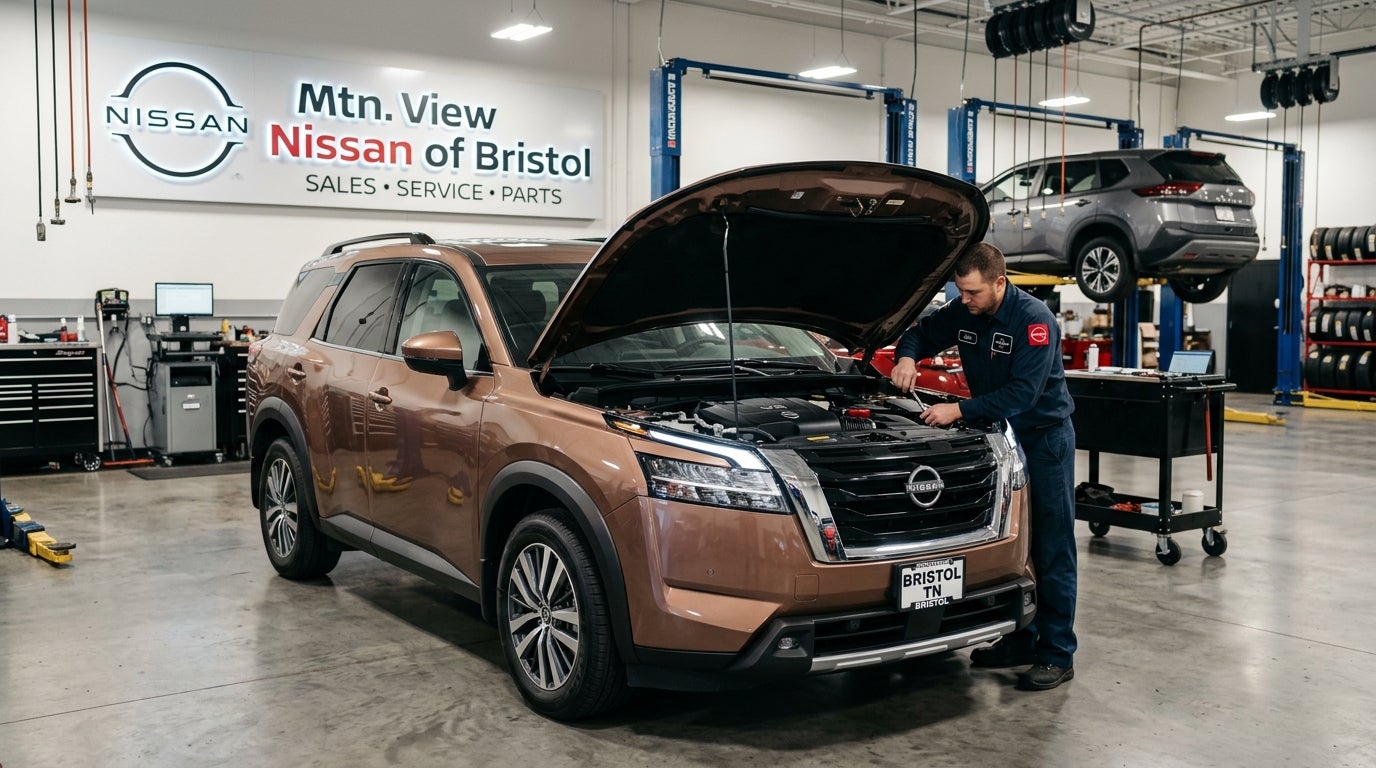
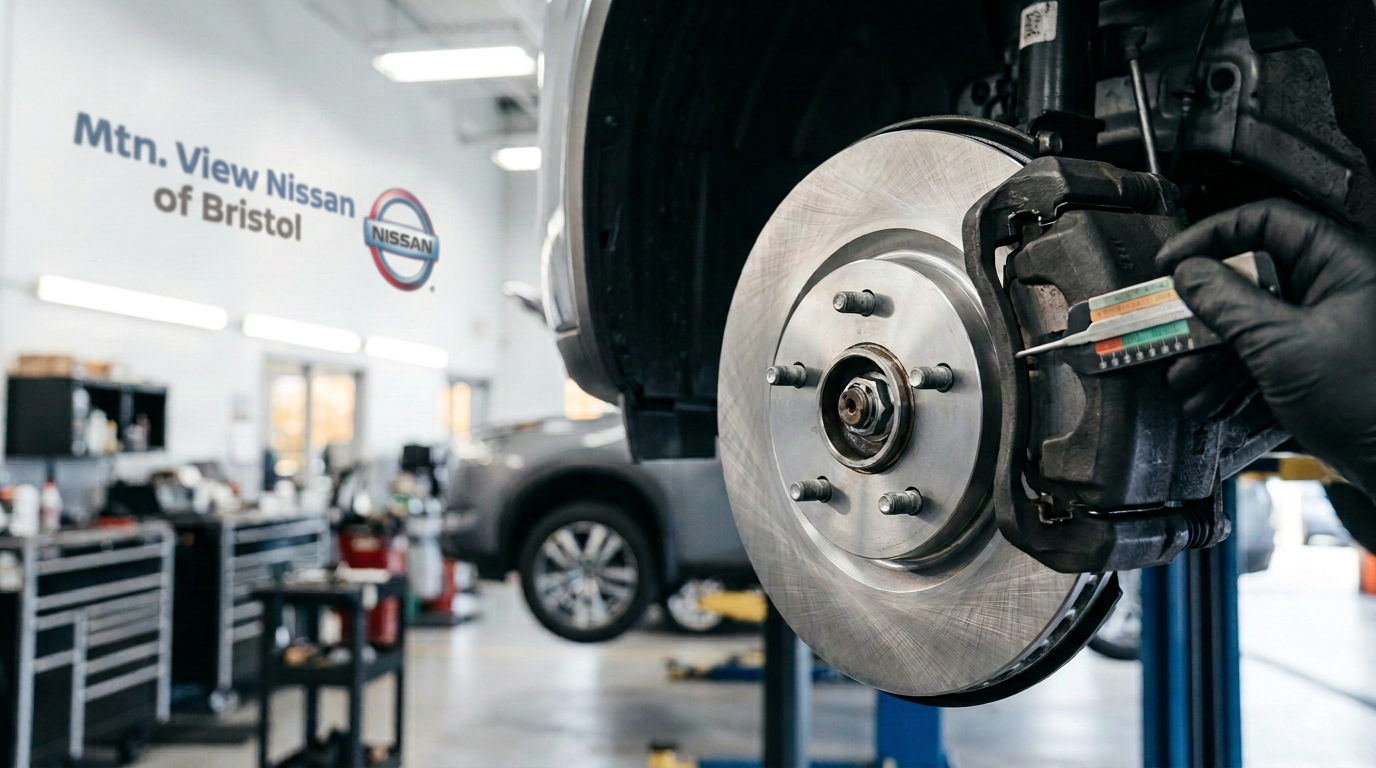
A Nissan Pathfinder requires a professional brake inspection every 10,000 to 15,000 miles or once per year, while brake pad replacements are typically needed every 30,000 to 70,000 miles. Fresh brake fluid should be installed every 24 months or 24,000 miles to remove moisture and preserve full hydraulic pressure across all four wheels. Regular inspection schedules ensure that friction components remain within safe operating tolerances before rotor damage occurs. PATHFINDER BRAKE MAINTENANCE TIMELINE Every 10,000 - 15,000 Miles : Visual pad thickness & rotor inspection Every 24,000 Miles / 2 Years: Full brake fluid drain and system flush Every 30,000 - 70,000 Miles : Axle pad replacement & rotor service The 3-row SUV features 4-wheel disc brakes engineered with 13.8-inch front vented rotors and 13.0-inch rear vented rotors. These generous rotor surface dimensions dissipate intense kinetic heat created when bringing a fully loaded vehicle to a complete stop. However, driving conditions across the Appalachian Highlands terrain in Bristol place distinct physical demands on friction materials. Routine stop-and-go trips, severe weather changes, and towing heavy gear require proactive oversight of pad wear depth and rotor surface integrity. During a routine service visit, technicians measure pad friction thickness in millimeters, evaluate rotor runout, check caliper slide pins, and test the boiling point of the hydraulic fluid. Catching uneven pad wear early prevents damage to the caliper pistons and avoids costly rotor replacement. Drivers needing expert diagnostics can request our Bristol dealership directions or give our service department (423) 989-6700 a call to speak with an advisor. Table of Contents What Are the Early Warning Signs That a Nissan Pathfinder Needs Brake Service? How Does East Tennessee Mountain Driving Impact Pathfinder Brake Pad Life? What Is the Cost and Fluid Flush Schedule for Front vs Rear Pathfinder Brake Repairs? How Do Pathfinder Tow Mode and Rear Automatic Braking Dynamics Function? Where to Get Certified Nissan Pathfinder Brake Inspections and Repairs Near Bristol Common Questions About Nissan Pathfinder Brake Maintenance Maintain Reliable Stopping Power at Mtn. View Nissan of Bristol What Are the Early Warning Signs That a Nissan Pathfinder Needs Brake Service? High-pitched squealing from built-in metallic wear indicators, a soft or spongy brake pedal feel, steering wheel vibration under deceleration, or an illuminated dashboard warning light signal that a Nissan Pathfinder requires immediate brake service. Ignoring these audible and tactile warnings increases stopping distances and leads to premature rotor scoring. COMMON BRAKE WARNING SIGNS High-Pitched Squeal : Wear indicator tab contacting the rotor surface Pedal Pulsation : Thermal disc warping or lateral rotor runout Spongy Pedal Feel : Moisture contamination or air in hydraulic lines Deep Metal Grinding : Friction pad completely worn to metal backing Manufacturers build sacrificial metal tabs into friction pads that contact the rotor surface once pad thickness drops near 3 millimeters, producing a persistent squeal. If pad wear progresses beyond this point, the steel backing plate strikes the rotor face directly, causing severe metal-on-metal grinding. Steering wheel shudder during high-speed braking points to rotor thickness variation or thermal warping, which prevents the pads from making flat contact against the disc surface. Hydraulic system issues present as altered pedal resistance. Air bubbles in the lines or degraded fluid cause the pedal to travel closer to the floorboard before engagement occurs. Our technicians observe that drivers navigating local mountain routes often notice subtle pedal pulsation during prolonged downhill braking long before audible squealing starts, indicating localized heat buildup in the front rotors. Addressing these early indicators promptly protects the vehicle's standard four-wheel ABS, Brake Assist, and Electronic Brake-force Distribution systems. How Does East Tennessee Mountain Driving Impact Pathfinder Brake Pad Life? Navigating steep elevation shifts increases kinetic friction and thermal strain, which can shorten Pathfinder brake pad and rotor lifespan by 20% to 40% compared to flat-highway driving. Frequent descents force the braking system to absorb extreme heat continuously without adequate cooling intervals between stops. MOUNTAIN VS. FLAT TERRAIN BRAKE WEAR Flat Highway Driving : Estimated pad lifespan 50,000 - 70,000 miles Mountainous Terrain : Estimated pad lifespan 30,000 - 45,000 miles Impact Factor : Constant friction heat lowers pad durability When descending mountain highways, friction pads clamp against the cast-iron rotors for extended periods, generating temperatures that can exceed 600 degrees Fahrenheit. This intense thermal load glazes the pad friction material, reducing its coefficient of friction and causing pedal fade. Repeated heat spikes can also cause heat checking—microscopic stress cracks on the rotor face—which accelerates pad wear and reduces overall stopping efficiency. Family outings and camping trips around Bristol put additional weight in the cabin and cargo bay, further increasing kinetic energy during downhill braking. Driver habits play a vital role in preserving component longevity. Tapping the brakes firmly and releasing them allows air to flow over the vented rotors, whereas constant light pressure traps heat against the friction surface. Utilizing lower transmission gear ratios during steep descents helps control vehicle velocity using engine compression rather than relying solely on the service brakes. What Is the Cost and Fluid Flush Schedule for Front vs Rear Pathfinder Brake Repairs? Front brake service on a Nissan Pathfinder carries a slightly higher parts cost than rear brake service because the front axle performs 60% to 70% of total stopping work using larger pads and 13.8-inch rotors. A full hydraulic fluid flush is recommended every 24 months or 24,000 miles to clear out moisture and protect internal hydraulic valves. Service Component Front Axle Rear Axle Rotor Diameter 13.8 inches (vented) 13.0 inches (vented) Workload Distribution 60% - 70% of stopping force 30% - 40% of stopping force Pads & Hardware Size Heavy-duty large footprint Standard secondary footprint Recommended Service Every 30,000 - 50,000 miles Every 40,000 - 60,000 miles Because front brakes handle dynamic weight transfer during deceleration, front pads feature a larger surface area and thicker friction lining. The rear axle utilizes 13.0-inch vented rotors and smaller calipers. Consequently, replacing front pads and rotors requires heavier hardware and greater material mass, resulting in a modest price premium per axle compared to the rear setup. Brake fluid is hygroscopic, meaning it naturally absorbs ambient moisture through rubber flexible hoses and reservoir seals over time. Moisture lowers the boiling point of DOT 3 or DOT 4 fluid, which can cause fluid aeration under heavy braking and trigger internal oxidation inside the anti-lock brake pump. Installing factory-specified friction components and fluid from our genuine Nissan parts department preserves original pedal feel and maintains system calibration for the engine's standard 3.5L V6 power delivery. How Do Pathfinder Tow Mode and Rear Automatic Braking Dynamics Function? Pathfinder Tow Mode alters transmission shift logic to hold lower gears longer and initiate downhill downshifts for engine braking, while Rear Automatic Braking uses rear sonar sensors to trigger automatic hydraulic pressure if an obstacle is detected during low-speed reversing. Both technologies actively manage vehicle dynamics to reduce physical stress on the wheel brakes. ADVANCED BRAKING & ASSIST DYNAMICS Tow Mode : Downshift logic aids engine braking on grades Rear Automatic Braking: Sonar sensors apply full stop in reverse Dynamic Brake Support : Boosts hydraulic force in emergency stops Safety Recognition : IIHS TOP SAFETY PICK+ & NHTSA 5-Star Rating When pulling up to the maximum 6,000 lbs towing capacity, activating Tow Mode optimizes the 9-speed automatic transmission. Downhill Speed Control detects vehicle acceleration on descents and automatically shifts to a lower gear ratio, utilizing engine compression to slow the vehicle. This engine braking assistance minimizes thermal buildup in the wheel rotors, preserving braking power for sudden stops. For tight parking maneuvers, Rear Automatic Braking operates through rear bumper sensors. If a driver reverses toward a stationary object without slowing down, the module sends an emergency pulse command to the hydraulic actuator, halting the SUV instantly. These features build upon standard safety engineering, including Automatic Emergency Braking with Pedestrian Detection and Dynamic Brake Support, which helped earn the Pathfinder an IIHS TOP SAFETY PICK+ rating and a 5-star overall safety score from NHTSA. Where to Get Certified Nissan Pathfinder Brake Inspections and Repairs Near Bristol Nissan Pathfinder owners can access factory-certified brake diagnostics, genuine OEM pad and rotor replacements, and hydraulic flushes at Mtn. View Nissan of Bristol. Factory-trained technicians use specialized Nissan diagnostic software to verify electronic brake actuators and measure pad thickness precisely. MTN. VIEW NISSAN OF BRISTOL SERVICE ADVANTAGE Factory-Trained Technicians: Certified on all Nissan hydraulic systems Genuine OEM Nissan Parts : Factory pad compounds & direct-fit rotors Advanced Diagnostics : Computerized ABS & sonar sensor alignment Convenient Location : Accessible service center on West State St Using genuine OEM pads and rotors ensures that friction coefficients match the factory calibration of the vehicle's electronic driver-assist safety suite. Generic aftermarket pads can introduce noise, increase dust, or alter sensor response times during automated emergency stops. Certified service centers maintain exact factory alignment tolerances for calipers, hardware clips, and parking brake actuators. Located convenient to the historic State Street corridor, our facility features modern service bays equipped specifically for midsize 3-row SUVs. Owners can find our service center location easily, speak with an advisor by calling (423) 989-6700, or directly schedule a service appointment online to reserve a dedicated maintenance slot. Common Questions About Nissan Pathfinder Brake Maintenance Q: Can worn brake rotors be resurfaced instead of replaced on a Pathfinder? Rotors can be resurfaced on a lathe if their remaining metal thickness exceeds the minimum discard specification stamped on the rotor housing. However, if severe heat checking, deep grooves, or thermal warping are present, replacing the rotors with new genuine Nissan units is necessary to restore flat friction contact and maintain proper heat dissipation. Q: Why does the brake pedal feel soft after driving down steep mountain grades? A soft brake pedal after mountain driving indicates fluid overheating or pad glazing. Extreme temperatures created by continuous braking can cause moisture in aging brake fluid to boil, creating compressible vapor bubbles in the hydraulic lines. Flushing old fluid and inspecting pad friction material resolves pedal fade and restores crisp pedal feel. Q: How does Automatic Emergency Braking interact with standard brake pad wear? Automatic Emergency Braking with Pedestrian Detection relies on predictable friction coefficients to calculate stopping distances accurately. Worn brake pads or warped rotors decrease physical stopping efficiency, which can increase the distance required for automated safety systems to bring the SUV to a complete halt. Maintaining fresh brake components preserves calibrated safety system performance. Q: What happens if brake fluid is not flushed every two years? Skipping hydraulic fluid flushes allows accumulated moisture to corrode internal caliper pistons, rubber seals, and the ABS hydraulic control module. Water accumulation also drastically lowers the fluid's boiling point, leading to severe brake fade during heavy usage or high-load towing scenarios. Regular two-year flushes prevent costly hydraulic component failures. Q: What items are checked during a multi-point Nissan brake inspection? A multi-point brake inspection evaluates inner and outer pad lining thickness, rotor surface condition, caliper slide pin movement, brake line integrity, parking brake adjustment, and fluid moisture levels. Technicians also inspect dust boots and sensor wiring to verify that all electronic braking assists function according to factory specifications. Maintain Reliable Stopping Power at Mtn. View Nissan of Bristol Keeping your vehicle's braking system in peak condition is vital for family safety, mountain driving confidence, and long-term vehicle dependability. Proactive inspections and timely pad replacements protect high-value components like rotors and calipers from unnecessary wear, saving you time and stress down the road. Our team at Mtn. View Nissan of Bristol is equipped with the specialized tools, factory-trained expertise, and genuine OEM parts needed to service your vehicle correctly. Take the next step in protecting your vehicle by choosing to schedule a service appointment online today. © 2026 Mtn. View Nissan of Bristol. All rights reserved.
What Is Included in Nissan Factory Scheduled Maintenance?
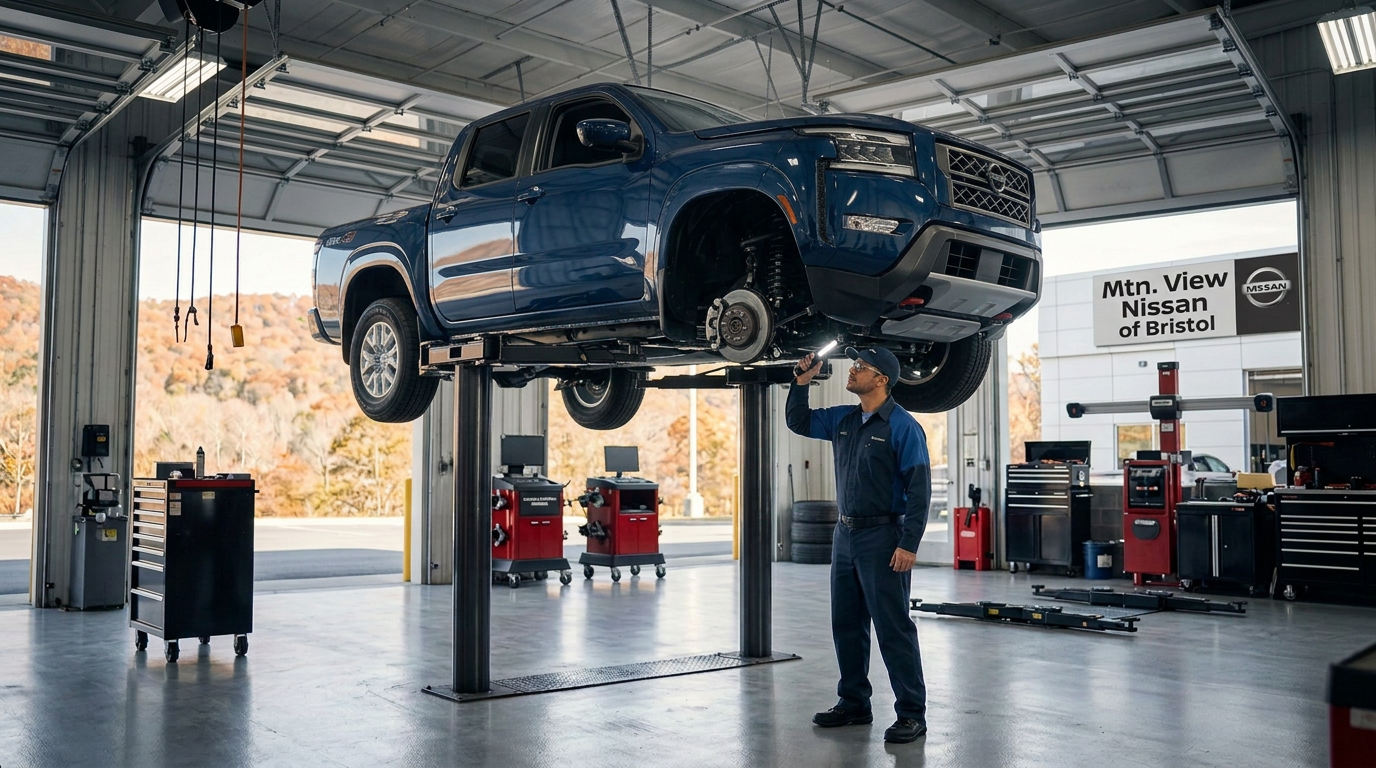
Nissan factory scheduled maintenance includes routine fluid replacements, filter changes, tire rotations, and multi-point system inspections performed at regular mileage or time intervals. Under standard driving conditions, routine service occurs every 7,500 miles or 6 months, covering synthetic motor oil changes, oil filter replacement, tire rotations, and safety inspections. Under severe driving conditions, intervals shorten to every 5,000 miles or 6 months, with major service benchmarks occurring at 30,000 miles and 105,000 miles. Operating a vehicle in the Appalachian Highlands requires careful adherence to these maintenance timelines. Mountain roads, steep grade changes, and variable weather around Bristol place additional mechanical stress on friction materials and drivetrain fluids. To keep key systems performing as designed, factory service schedules establish clear checkpoints across your vehicle's lifespan: Every 5,000 to 7,500 miles: Engine oil and filter change, tire rotation, windshield washer fluid top-off, and visual inspection of brake pads, calipers, and rotors. Every 15,000 miles: In-cabin microfilter replacement, differential oil inspection, brake line and cable inspection, and steering gear evaluation. Every 30,000 miles: Engine air filter replacement, fuel line inspection, evaporative vapor lines check, and transfer case fluid inspection on all-wheel-drive models. Every 105,000 miles: Replacement of long-life iridium spark plugs and complete engine coolant system flush. Following these intervals prevents premature wear on critical powertrain components. Drivers can visit our Bristol location or call our service team at (423) 989-6700 to verify their specific model's requirements. Table of Contents What Maintenance Is Required at the 30,000-Mile Nissan Service Interval? How Can Owners Verify Factory Service Requirements for 2027 Nissan Vehicles? Does Nissan Offer Prepaid Maintenance Plans to Lower Out-of-Pocket Costs? Where Can Drivers Get Authorized Nissan Service in the Tri-Cities Region? Common Questions About Nissan Factory Maintenance Schedule Authorized Nissan Factory Scheduled Maintenance at Mtn. View Nissan What Maintenance Is Required at the 30,000-Mile Nissan Service Interval? The 30,000-mile service interval is a major factory maintenance milestone that replaces essential air filters and conducts comprehensive inspections of braking, fuel, and drivetrain systems. At this mark, technicians replace the engine air filter to maintain proper air-to-fuel ratios and install a new in-cabin microfilter to protect interior air quality. Beyond filter replacements, the 30,000-mile service includes a fresh change of synthetic motor oil, an oil filter replacement, and a full tire rotation to promote even tread wear across all four positions. Technicians also perform detailed mechanical inspections, including checking: Brake linings, drums, pads, rotors, and hydraulic brake lines for wear or leaks. Exhaust system components, heat shields, and mounting hardware. Steering gear, linkage, axle shaft boots, and front suspension components. Drive shaft sleeves and differential fluid levels on trucks and SUVs. Fuel tank cap gaskets, fuel lines, and vapor control systems. Skipping the 30,000-mile service can allow minor wear items to turn into larger mechanical issues. Replacing intake air filters on schedule prevents unmetered dust from reaching internal engine surfaces, preserving cylinder cross-hatching and fuel efficiency. Vehicle owners can easily reserve a service slot through our online service scheduler or source genuine replacement parts directly from our Nissan parts center. How Can Owners Verify Factory Service Requirements for 2027 Nissan Vehicles? Owners can verify official factory maintenance schedules for 2027 Nissan vehicles through the MyNISSAN mobile application, the in-vehicle Digital Owner's Manual on the infotainment screen, or the printed Service and Maintenance Guide. These official resources outline vehicle-specific maintenance schedules tailored to specific powertrains, trim configurations, and driving environments. Modern Nissan vehicles feature integrated digital tools that eliminate guesswork from ownership maintenance: MyNISSAN Mobile App: Connects directly to vehicle telematics to display real-time mileage, service alerts, and upcoming maintenance schedules based on actual driving conditions. In-Vehicle Digital Owner's Manual: Accessible directly through the central touchscreen display on compatible models, featuring natural voice-search capability to quickly look up service intervals, fluid capacities, and indicator light meanings. Instrument Cluster Maintenance Monitors: Tracks oil life and service timers, displaying explicit alerts on the driver information display when a maintenance milestone approaches. Consulting official guides ensures your vehicle receives the exact oil viscosities, filter part numbers, and inspection sequences specified by factory engineers. Does Nissan Offer Prepaid Maintenance Plans to Lower Out-of-Pocket Costs? Nissan offers official Security+Plus Prepaid Maintenance Plans that lock in standard maintenance costs at current retail rates across customized time and mileage terms. These factory-backed plans protect vehicle owners against unexpected repair costs and inflation by prepaying for routine services such as oil changes, tire rotations, and scheduled multi-point inspections. Prepaid plans provide financial predictability for working-class families and retirees in Bristol who manage strict household operational budgets. Key benefits of factory prepaid maintenance plans include: Cost Protection: Locks in service rates for the duration of the plan, insulating owners from rising fluid and parts costs. Flexible Coverage Options: Offers choices ranging from basic oil change packages to full scheduled maintenance coverage including filter replacements and brake inspections. Transferable Value: Remaining coverage can be transferred to a subsequent private buyer, enhancing residual vehicle resale value. Dealership Savings: Combines routine items into structured bundles that cost less overall than purchasing individual services control by control. Additionally, drivers can lower out-of-pocket routine maintenance expenses by reviewing online service coupons on dealership websites before booking appointments. Where Can Drivers Get Authorized Nissan Service in the Tri-Cities Region? Authorized Nissan factory scheduled maintenance is available through factory-certified dealership service departments staffed by technicians trained specifically on Nissan engineering principles. Certified centers use proprietary diagnostic systems, specialized service tools, and genuine OEM parts designed to meet original factory tolerances. While federal protection under the Magnuson-Moss Warranty Act allows independent mechanics to perform routine maintenance without automatically voiding factory warranties, using an authorized dealership service department offers several key operational advantages: Direct Warranty Record Logging: Every completed service is automatically uploaded to Nissan's national database, establishing an undisputed maintenance history for warranty claims and trade-in valuations. Factory Recalls and Technical Bulletins: Authorized centers check for pending software updates and safety recall campaigns during every routine maintenance visit. OEM Parts Integrity: Service is completed strictly with factory-approved fluids, filters, and structural components backed by a national parts warranty. Positioned near the historic State Street corridor, certified service centers provide local drivers with factory-backed vehicle maintenance without long travel times. Common Questions About Nissan Factory Maintenance Q: Does servicing my vehicle at an independent shop void my Nissan factory warranty? Servicing your vehicle at an independent repair shop does not void your factory warranty, provided the service follows Nissan's specified maintenance intervals and uses compatible parts. Federal law protects your right to choose any qualified repair facility. However, you must keep detailed, dated service records and receipts proving that all maintenance was performed according to OEM guidelines if a warranty claim arises. Q: What driving conditions classify a vehicle under Nissan's severe maintenance schedule? Nissan classifies vehicle operation as severe if you frequently drive short distances under 5 miles, operate in freezing temperatures, tow a trailer or camper, idle extensively, drive on dusty or unpaved roads, or stop and start repeatedly in heavy traffic. Operating under severe conditions requires more frequent oil changes, brake inspections, and fluid replacements to protect powertrain components. Q: When do spark plugs need to be replaced in modern Nissan vehicles? Most modern Nissan vehicles equipped with factory iridium spark plugs require replacement at 105,000 miles or 84 months, whichever comes first. This replacement interval applies to both standard and severe driving schedules. Timely spark plug replacement prevents engine misfires, maintains proper combustion efficiency, and protects catalytic converters from unburned fuel damage. Q: What happens if I miss a factory scheduled maintenance interval? Missing a scheduled maintenance interval can lead to accelerated wear on critical mechanical components, reduced fuel efficiency, and potential mechanical failure. If a component fails due to documented maintenance neglect, warranty coverage for that specific repair may be denied. If you miss an interval, schedule a service visit as soon as possible to bring all fluid, filter, and inspection points up to date. Q: Is differential fluid replacement necessary on front-wheel drive Nissan models? Front-wheel drive Nissan vehicles integrate the transmission and differential into a single assembly called a transaxle, which shares transmission fluid rather than separate differential oil. Standalone differential fluid inspection and replacement apply specifically to rear-wheel drive, four-wheel drive, and all-wheel drive models like the Frontier, Pathfinder, and Armada, where separate front or rear differential housings are present. Schedule Authorized Nissan Factory Scheduled Maintenance at Mtn. View Nissan Keeping your vehicle on its factory maintenance schedule is the single most effective way to protect its long-term reliability, safety, and resale value. Whether your vehicle is approaching its first 7,500-mile oil change or a major 30,000-mile service interval, our team delivers factory-certified care tailored to your exact model. Our factory-trained technicians use specialized diagnostic tools and genuine OEM parts to ensure every filter, fluid, and mechanical system meets Nissan standards. Contact our team to book your upcoming maintenance session and keep your vehicle operating at peak performance. Visit our service center on West State Street or call us directly at (423) 989-6700 to speak with a service advisor and reserve your appointment today. © 2026 Mtn. View Nissan of Bristol. All rights reserved.